Source Welding Flux Calcined Bauxite Powder for Refractory Use
Find 21 welding flux calcined bauxite powder options with Al2O3 levels from 75% to 88%. Compare bulk densities, refractoriness, and packaging types from Chinese suppliers to identify suitable materials for industrial applications; compare the available evidence and request quotations based on your requirements.
Key considerations
Products List


Comprehensive Sourcing Guide
Welding Flux Calcined Bauxite Powder Sourcing Guide
Procuring calcined bauxite for welding flux applications requires distinguishing between raw ore and processed refractory materials that meet specific chemical purity standards. The market offers products ranging from granular forms to fine powders, with aluminum oxide content typically varying between 75% and 88% depending on the specific grade selected. Buyers must verify that the material originates from high-quality bauxite ore processed via sintering methods to ensure consistent performance in high-temperature environments.
Selection criteria should prioritize materials with low moisture content, generally observed between 0.1% and 0.5%, to prevent gas porosity in welds. The physical form, whether powder or granular, must align with the specific welding process requirements, as particle size distribution significantly influences flux fluidity and slag removal characteristics. Understanding these physical distinctions is essential for maintaining the structural integrity of the final welded joint.
Product Scope and Observed Listing Signals
The available product listings indicate a diverse range of specifications, including particle sizes from 0-1mm up to 5-8mm, alongside fine mesh options like 200mesh and 325mesh. These variations suggest that suppliers cater to different industrial needs, from heavy-duty refractory linings to precision welding applications requiring fine powder consistency. Buyers should carefully cross-reference the listed particle size with their specific equipment requirements to ensure optimal flow and mixing properties.
Packaging options observed in the market include big jumbo bags, 25kg bags, and ton bags, offering flexibility for both small-scale operations and large industrial procurement. The presence of customization options allows buyers to request specific grading or packaging configurations that match their logistical constraints. However, the wide range of observed prices and minimum order quantities necessitates a clear definition of volume needs before engaging with potential suppliers to secure favorable commercial terms.
Technical Specifications to Verify
Critical technical parameters for welding flux applications include refractoriness, which can range from 1580°C to over 2000°C depending on the calcination level and product shape. Buyers must confirm that the selected material maintains a bulk density between 2.8 and 3.3 g/cm³ to ensure proper packing and consistent melting behavior during the welding process. Verifying these physical properties is essential to prevent material failure under the extreme thermal stresses encountered in industrial welding scenarios.
Chemical composition analysis is equally vital, with aluminum oxide levels typically falling between 75% and 88%, and iron oxide content often capped at 2.5% maximum. The loss on ignition should remain low, typically between 0.5% and 2.0%, to minimize volatile emissions that could compromise weld quality. Additionally, the material's hardness, often rated between 8 and 9 on the Mohs scale, contributes to its abrasion resistance, which is a key factor in its suitability for abrasive and refractory applications.
Compliance and Safety Documentation
While specific certification names are not universally standardized in the provided data, buyers should request documentation confirming that the material meets relevant industry standards for refractory and abrasive applications. The product origin is consistently listed as China, so verifying that the supplier adheres to international safety and quality protocols is crucial for ensuring consistent material performance. Documentation should explicitly address the material's classification as high-alumina refractory material to confirm its intended use case.
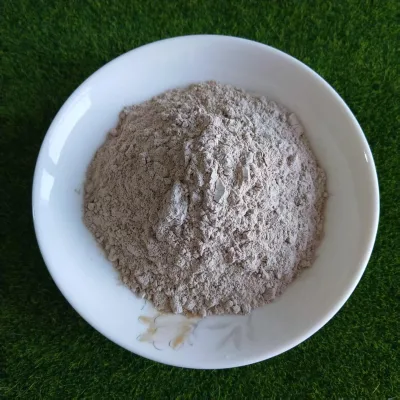
Safety data sheets must be reviewed to understand the handling requirements for calcined bauxite powder, particularly regarding dust generation and inhalation risks. The material's typical appearance as gray, brown, or reddish-brown granular or powder forms should be matched against the physical samples provided to ensure no contamination or unexpected impurities are present. Ensuring that the supplier provides comprehensive safety documentation helps mitigate workplace hazards and ensures regulatory compliance during transport and storage.
Cost Drivers and Commercial Terms
The final cost of calcined bauxite is heavily influenced by the degree of calcination, the specific aluminum oxide content, and the required particle size distribution. Higher purity grades with tighter chemical tolerances, such as those with 85% minimum Al2O3, typically command a premium over standard refractory grades. Buyers should anticipate that customization requests for specific mesh sizes or packaging configurations may also impact the unit price and minimum order quantity requirements.
Commercial terms often involve significant variability in minimum order quantities, ranging from single units to 2000 units, depending on the supplier's capacity and the buyer's volume. Lead times and shipping costs are additional factors that can affect the total landed cost, especially when sourcing from international origins. Negotiating clear terms regarding sample availability and bulk pricing tiers is essential for managing budget constraints while securing the necessary volume for production needs.
Supplier Qualification and Quality Control
Evaluating a supplier's production process is critical, as the sintering method used to create calcined bauxite directly impacts the material's final density and chemical stability. Buyers should verify that the supplier has established quality control measures to maintain consistent bulk density and moisture content across different production batches. The ability to provide samples for testing is a strong indicator of a supplier's confidence in their product consistency and their willingness to engage in a rigorous vetting process.
Quality control protocols should include regular testing of key attributes such as crushing strength, apparent porosity, and specific gravity to ensure they fall within the expected ranges. Suppliers offering customized models and specific product codes, such as YRD-010 or YRD-046, demonstrate a capacity for tailored production, but this requires strict adherence to agreed-upon specifications. Establishing a clear communication channel for quality assurance and defect resolution is necessary to maintain long-term supply chain reliability.
Long-Term Procurement Checks
Sustaining a reliable supply chain for calcined bauxite requires periodic re-verification of material properties to ensure they have not drifted from the original specifications. Buyers should implement a schedule for random sampling and testing of incoming shipments to confirm that refractoriness, chemical composition, and physical dimensions remain consistent over time. This proactive approach helps identify potential supplier issues before they impact production schedules or weld quality.
Building a relationship with suppliers who offer customization and maintain transparent communication channels is vital for adapting to changing market demands or technical requirements. Regular reviews of supplier performance, including their ability to meet delivery timelines and maintain quality standards, will help mitigate risks associated with supply chain disruptions. Continuous engagement ensures that the procurement strategy remains aligned with the evolving needs of the welding and refractory industries.
FAQs
What is the Al2O3 content in high-alumina calcined bauxite powder?
The Al2O3 content ranges from 75% to 88% in high-alumina calcined bauxite powder. This composition ensures excellent refractory performance for welding flux applications. The material also contains 2% to 3% TiO2, which contributes to its stability. Specific gravity is typically 3.70g/cm3, providing consistent density for industrial processing and reliable chemical reactions during welding operations.
Can calcined bauxite powder be customized for specific welding requirements?
Yes, customization is available for calcined bauxite powder to meet specific welding requirements. Manufacturers offer various particle sizes, including 0-1mm, 1-3mm, and 3-5mm, as well as 200mesh and 325mesh options. This flexibility allows buyers to select the exact grain size needed for optimal flux performance in different welding processes and equipment configurations.
What is the refractoriness temperature of calcined bauxite refractory material?
The refractoriness of calcined bauxite refractory material exceeds 1770°C, with some grades reaching up to 2000°C. This high heat resistance makes it suitable for demanding industrial environments. The material maintains structural integrity under extreme temperatures, ensuring long-term durability in applications such as rotary kilns and high-temperature furnaces where thermal stability is critical.
How is calcined bauxite powder packaged for international shipping?
Calcined bauxite powder is packaged in big jumbo bags, 25kg bags with ton bags, or 500kg bags for international shipping. These packaging options protect the material from moisture and contamination during transit. The packaging ensures safe handling and storage, maintaining the product's quality until it reaches the buyer's facility for immediate use in manufacturing or industrial processes.
What is the bulk density range of calcined bauxite powder?
The bulk density of calcined bauxite powder ranges from 2.8 to 3.3 g/cm3, with some specifications listing 2.90-3.25 or a minimum of 2.9. This density range indicates a well-sintered product with low porosity. The consistent bulk density ensures predictable performance in welding flux applications, providing reliable volume-to-weight ratios for precise formulation and mixing.
What are the key features of high-alumina bauxite powder?
Key features include low thermal conductivity, high-temperature resistance, good thermal insulation, and good mechanical strength. The material exhibits hardness of 8-9 on the Mohs scale and low moisture content of 0.1-0.3%. These properties make it ideal for refractory and abrasive applications, ensuring durability and efficiency in high-stress industrial environments where heat and wear are prevalent.